What Oil Capacity Do I Need in a Deep Fryer?
Recommended picks


Why Oil Capacity Actually Matters
The amount of oil a deep fryer holds determines how much food you can cook at once and how well the oil maintains temperature when cold food hits it. Too small a capacity and your food steams instead of crisps because the oil temperature drops sharply when you add a full basket. Too large and you waste quarts of oil on a batch of onion rings for two people, and that oil degrades faster the more times you heat and cool it. Getting the right capacity is one of the single biggest factors in whether your fried food turns out genuinely crispy or just greasy and pale. Wattage matters too, but oil volume sets the upper limit on batch size regardless of how powerful the heating element is.
Small Fryers: 1 to 2 Quarts
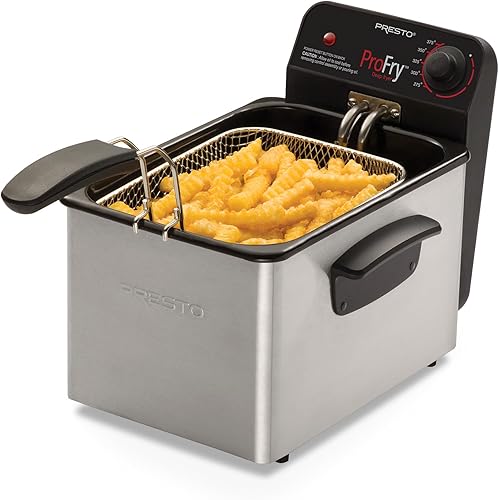
A 1 to 2 quart deep fryer is ideal for one or two people who fry occasionally, want minimal oil waste, and have limited counter space. The Presto 5470, which holds 1.1 quarts and runs on 1000 watts, is a practical example: it fits comfortably on a small kitchen counter and uses just enough oil to fry a couple of servings of fries or a few pieces of fish. Cleanup is also faster because there is less oil to filter and store. The trade-off is that you can only fry in small batches, so cooking for guests means multiple rounds. If you fry more than a few times per month or ever cook for more than two people, you will quickly outgrow this size.
Mid-Size Fryers: 3 to 4 Quarts
The 3 to 4 quart range is the sweet spot for most households. A fryer like the Presto 05461, which holds 3 quarts and draws 1800 watts, can handle a generous batch of chicken tenders, a full load of french fries, or several pieces of bone-in chicken at once. That wattage helps the oil recover temperature quickly between batches, which is what keeps the crust crispy rather than soggy. At roughly 3 to 4 quarts you also get a manageable oil change: you can filter and reuse the oil several times before discarding it, and the volume is small enough to pour off without a mess. This is the capacity we point most families of three or four toward first.
Large Fryers: 4.5 Quarts and Up
Once you regularly cook for five or more people, or you want to fry larger items like bone-in leg quarters or turkey parts, a fryer in the 4.5 to 5 quart range makes sense. The Presto 05466 at 5 quarts and 1800 watts is a well-reviewed example with over 6,700 buyer ratings. The bigger basket lets you fry a full family portion in a single batch, which keeps everything hot and ready at the same time instead of staggering servings. The downside is cost: you buy more oil up front, and a full oil change means discarding more. Countertop footprint also grows noticeably, so measure your available space before going this route.
How the Food You Fry Changes the Equation
Capacity needs vary by food type, not just headcount. French fries are light and airy so a 3 quart basket holds a surprisingly large pile. Chicken pieces are dense and drop oil temperature fast, so you want both more oil volume and more wattage to keep things cooking evenly. Donuts need enough depth to float freely without touching bottom or crowding each other. Egg rolls and spring rolls are long and narrow, so basket shape matters as much as quart count. Think through the two or three things you actually fry most often before picking a size, because the right capacity for fries and the right capacity for whole chicken thighs can be a full quart apart.
Common mistakes to avoid
- Buying a 1 quart fryer expecting to cook for four people, then wondering why the food comes out greasy
- Choosing capacity based on the largest possible meal rather than typical everyday cooking needs
- Ignoring wattage alongside capacity, a large tank paired with a weak heating element means slow oil recovery and soggy results
- Filling the basket past the maximum fill line to compensate for a small tank, which drops oil temperature sharply
- Storing unused quarts of oil in a large fryer between uses, accelerating degradation even without cooking
- Picking a countertop deep fryer sized for a restaurant when a 3 to 4 quart home unit would handle the same meals more efficiently
Frequently asked questions
How many quarts does it take to deep fry french fries for four people?
A 3 quart fryer handles a full family portion of french fries in one batch for most households of four. Fries are light and do not crowd the basket the way chicken does. If you regularly cook for five or more, step up to 4 quarts to give yourself some room and keep the oil temperature stable throughout the cook.
Can I use less oil than the fryer is rated for?
Most deep fryers have a minimum and maximum oil fill line marked inside the tank, and you should stay within that range. Going below the minimum means the heating element may not be fully submerged, which creates hot spots and can damage the unit. It also reduces the thermal mass of the oil, so temperature swings become more dramatic when you add cold food.
Is a bigger oil capacity always better for crispier food?
More oil volume helps maintain temperature when cold food enters the basket, which does help crispiness. But the wattage of the heating element matters just as much, because a large tank with a weak element will still lose temperature quickly. The best combination is a fryer sized to your actual batch needs with enough wattage to recover heat fast, typically 1500 watts or above for a 3 to 5 quart fryer.
How often do I need to change the oil in a home deep fryer?
Oil life depends on what you fry and at what temperature, but a general guideline for home use is 8 to 10 frying sessions before discarding. Frying breaded or battered foods breaks down oil faster than frying plain items. Smaller capacity fryers that you fill completely tend to get more use per quart before the oil degrades, while large fryers used at half capacity may spoil faster per cook session.
Does quart capacity refer to oil volume or total tank volume?
Manufacturers rate capacity by oil volume, meaning the amount of oil the fryer is designed to hold between its minimum and maximum fill lines. The total internal tank volume is slightly larger. Always follow the fill markings on the tank itself rather than filling to the brim, and check whether a given model lists oil capacity or food capacity in its specifications, as some brands list pounds of food instead of oil quarts.