Deep Fryer vs Air Fryer: Which One Actually Fits Your Kitchen?
Recommended picks
How Each Appliance Actually Cooks
A countertop deep fryer holds a reservoir of oil, typically heated to 325 to 375 degrees Fahrenheit, and fully submerges food so every surface makes direct contact with hot fat. That direct immersion is what creates the fast crust and juicy interior associated with restaurant-style fried chicken or doughnuts. An air fryer works more like a compact convection oven, using a powerful fan to blast hot air in rapid circulation around the food in a nonstick basket. The result is browning and crispiness, but the mechanism is completely different from true deep frying. Understanding that distinction helps you set realistic expectations before buying.
Taste and Texture: The Honest Comparison
For foods like french fries, fried chicken, onion rings, and donuts, a deep fryer produces a noticeably crunchier exterior and moister interior, because oil transfers heat much faster and more evenly than air. Air-fried versions of the same foods are lighter, with a drier crust, which many people prefer for everyday cooking. Neither result is objectively better, but if you have ever tasted a side-by-side comparison of deep-fried versus air-fried chicken wings, the difference is real and consistent. For foods like reheated pizza, frozen snacks, vegetables, or fish fillets, an air fryer actually performs extremely well and often delivers superior results to a standard oven.
Oil Use, Cost, and Health Considerations
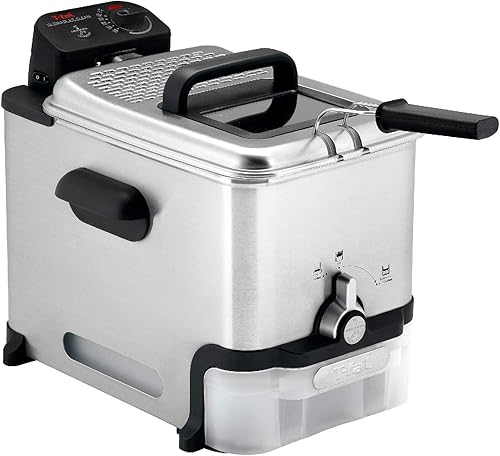
A deep fryer requires enough oil to fill its reservoir, which can range from about 1 quart for a compact model to 5 quarts or more for a family-sized unit like the Presto 05466, a 5-quart stainless steel fryer rated 4.6 stars by over 6,700 buyers. Oil that is properly filtered and stored can be reused multiple times, but you do need to buy it, store it, and eventually dispose of it. An air fryer uses a tablespoon or less per batch, which keeps ongoing costs very low and reduces the overall fat content of the finished food. If you or your family are trying to cut back on fried foods but still want that satisfying crunch, an air fryer is the practical compromise.
Capacity: Feeding One Person vs a Crowd
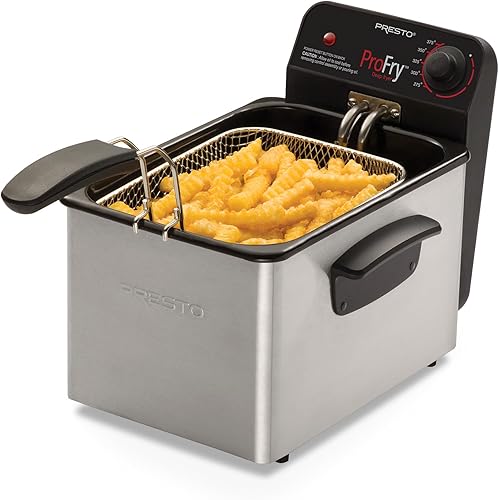
This is where a deep fryer has a meaningful structural advantage. A model like the Presto 05461, a 3-quart stainless steel fryer drawing 1800 watts with a 4.6-star rating from over 6,000 buyers, can fry a full pound of french fries in one batch. Larger units with 4 to 5-quart oil capacity handle whole chickens or large batches of wings without breaking a sweat. Most household air fryers top out at a 5 to 7-quart basket, which sounds large but fits far less food than the quart rating suggests, since you need space for air circulation and cannot pack the basket tight. For cooking for four or more people at once, you will often run two or three rounds in an air fryer where a deep fryer would do it in one.
Cleanup: The Biggest Practical Difference
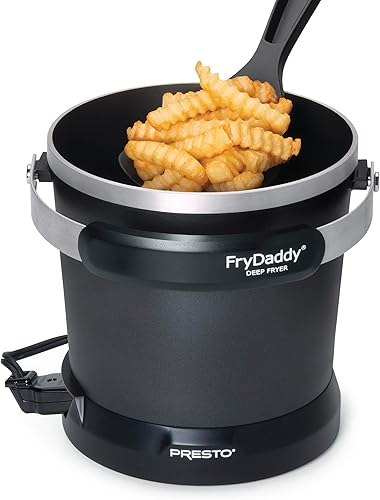
Hot oil cleanup is the main reason many home cooks choose an air fryer over a deep fryer. After frying, you need to cool the oil, strain it if reusing, wipe down the interior, and clean the basket and lid. A reliable, well-reviewed option at a budget price point like the Presto 05420, rated 4.6 stars by more than 30,000 buyers, draws 1200 watts and keeps the footprint small, but oil management is still part of the deal. An air fryer basket and tray rinse off quickly and usually go in the dishwasher. If you cook several times a week and cleanup time is a real concern, that day-to-day convenience adds up fast in favor of the air fryer.
Which One Should You Buy?
Choose a deep fryer if you want true restaurant-quality fried results, regularly cook for a family, or make foods where authentic texture is the whole point, like beignets, tempura, or traditional fried chicken. Choose an air fryer if you cook primarily for one or two people, want lower oil consumption, value fast cleanup, or plan to use it for a wide variety of foods beyond just frying. Many kitchens end up with both over time, since they genuinely complement each other rather than compete directly. If budget or counter space limits you to one, think hard about the meals you make most often and let that drive the decision.
Common mistakes to avoid
- Expecting an air fryer to exactly replicate deep-fried results, which leads to disappointment on texture-sensitive foods.
- Packing an air fryer basket too full, which blocks airflow and results in uneven, soggy food instead of crispy results.
- Using the wrong oil temperature in a deep fryer, causing greasy food when the temperature is too low or burning when it is too high.
- Buying a deep fryer that is too large for the household, which wastes oil and makes cleanup harder than necessary.
- Skipping oil filtration after deep frying, which shortens the oil's usable life and adds off-flavors to the next batch.
- Treating the air fryer air-fry mode as a substitute for all cooking, when some foods genuinely need the oil contact a deep fryer provides.
Frequently asked questions
Does an air fryer actually taste like a deep fryer?
For most foods, an air fryer produces a similar golden exterior but the texture is noticeably drier and lighter than oil-fried versions. Foods like french fries and chicken tenders come out well, but items that depend on a battered, oil-soaked crust, such as doughnuts or hush puppies, are much better in a true deep fryer. Many people come to prefer air-fried results once they adjust their expectations and stop comparing directly to oil frying.
How much oil does a countertop deep fryer use?
That depends on the capacity of the model. A compact 1 to 2-quart unit might require just under a quart of oil, while a family-sized 4 to 5-quart fryer can need several quarts to reach the proper fill line. The good news is that oil can be reused for multiple cooking sessions if you filter it after each use and store it properly between uses. Keeping a dedicated fry oil container makes management much more practical.
Is an air fryer faster than a deep fryer?
Deep fryers generally cook faster because oil transfers heat more efficiently than air, especially for dense or breaded foods. However, an air fryer needs no preheating beyond a short 3 to 5 minute warm-up, while a deep fryer needs 10 to 15 minutes to bring oil up to temperature. For small portions, total time end-to-end can be similar. For larger batches, the deep fryer is usually faster per pound of food cooked.
Can I use an air fryer and a deep fryer for the same recipes?
Most deep fryer recipes can be adapted for an air fryer with a light spray of oil, though you should expect some difference in texture. Recipes that rely on a wet batter, like tempura or beer-battered fish, do not work well in an air fryer because the batter drips and does not set properly without oil immersion. Breaded coatings, seasoned fries, and marinated proteins translate much more successfully to air frying.
Which is easier to clean, a deep fryer or an air fryer?
An air fryer is significantly easier to clean because the basket and tray are typically nonstick and dishwasher-safe, with no oil to manage. A deep fryer requires cooling and storing or disposing of oil, wiping down the interior tank, and cleaning the basket and any filters or lids. For frequent cooks who value convenience, that cleanup difference is one of the most practical reasons to choose an air fryer for everyday use.