Induction vs Electric Countertop Burner: Which One Should You Buy?
Recommended picks
- Elite Gourmet
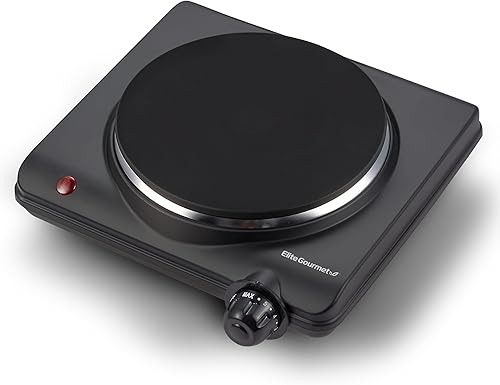
Elite Gourmet ESB-301BF# Countertop Burner
$16.991,000+ bought last monthView on Amazon


How Each Type Works
An induction countertop burner runs an alternating current through a copper coil beneath a ceramic glass surface. That current creates a magnetic field that induces electrical currents inside the bottom of your pot, and those currents generate heat directly in the metal. The glass surface itself stays relatively cool to the touch unless a hot pan sits on it for a long time. A standard electric countertop burner uses a resistive coil or cast iron plate that glows red when current passes through it, warming the surface and then the cookware by direct contact. This older approach wastes more energy as ambient heat, but it works with any pan regardless of material.
Speed and Wattage: What the Numbers Mean
Wattage is the most reliable spec to compare when shopping for a countertop burner. Most induction models run at 1400 to 1800 watts, and because they transfer energy so efficiently, they bring a quart of water to a boil noticeably faster than a same-wattage electric coil burner. For example, the duxtop BT-180G3 runs at 1800W and draws on induction efficiency to outpace coil burners at the same draw. The Nuwave PIC FLEX at 1400W still heats faster than many electric coil units rated higher, simply because less heat is lost to the air. Budget electric coil burners like the Elite Gourmet ESB-301BF# run at 1000W, which is enough for simmering, reheating, and small-batch cooking but will feel noticeably slower for tasks like boiling pasta water.
Cookware Compatibility: The Biggest Induction Catch
Induction only works with magnetic cookware. Cast iron, carbon steel, and most stainless steel pots and pans are compatible. Aluminum, copper, and glass cookware will not work unless they have a magnetic base bonded to the bottom. The easiest test is a refrigerator magnet: if it sticks to the bottom of your pan, the pan works on induction. Electric coil burners accept any flat-bottom cookware without restriction, which makes them the obvious pick if your collection is mostly aluminum nonstick or you need to use an older pot that has never had an induction-compatible surface.
Cleanup and Safety
Induction burners have a smooth ceramic glass surface with no coils, rings, or raised grates to scrub around. Spills that land on the cooler surface around the pan often do not bake on, making a wipe-down with a damp cloth enough for most messes. Electric coil or cast iron plate burners have more surface texture and get significantly hotter in the area around the cooking zone, so spills tend to cook onto the surface and require more effort to remove. On the safety side, induction has a clear advantage with kids or elderly family members because the surface does not stay dangerously hot after you remove the pan.
Price: What You Get at Each Budget
Basic electric coil countertop burners start under $15 to $20. The Elite Gourmet ESB-301BF# at $16.99 has over 14,000 buyer reviews and a 4.4-star rating, making it one of the most proven value picks in the category. Induction burners start a bit higher, with solid entry-level options around $50 to $70. The Nuwave PIC FLEX at $59.99 and the duxtop BT-180G3 at $70.99 represent the mainstream induction sweet spot, where you get touch controls, glass surfaces, and enough wattage for everyday cooking without spending over $100. If you are choosing between a $17 electric and a $70 induction unit and will use it daily, the induction model pays back the price gap through faster cooking and lower electricity use over time.
Which One Is Right for You?
Choose induction if you have magnetic cookware, cook frequently, and value quick heat-up, precise temperature control, and easy cleanup. The duxtop BT-180G3 is a strong all-around pick at 1800W with a glass surface, push-button controls, and a massive review base confirming its reliability. Choose a standard electric burner if you are outfitting a dorm room or small apartment on a minimal budget, if your cookware is aluminum or copper, or if you only need occasional use for warming food. The Elite Gourmet ESB-301BF# at under $20 covers those situations well without asking you to replace your pots.
Common mistakes to avoid
- Buying an induction burner without first checking whether your pots and pans are magnetic
- Assuming a lower-wattage induction unit is slower than a higher-wattage electric coil burner when the opposite is usually true
- Overlooking the weight of the unit, which matters when storing it in a cabinet or moving it to a table
- Using a pan with a warped or unflat bottom on an induction surface, which causes uneven heating and can trigger error codes
- Skipping the extension cord warning: most countertop burners should plug directly into a wall outlet rated for the wattage, not a lightweight extension cord
- Choosing a single burner at 1000W for large-pot tasks like canning or boiling a full stockpot, where you really need 1500W or more
Frequently asked questions
Can I use any pan on an induction countertop burner?
No. Induction requires cookware with a magnetic base, meaning cast iron, carbon steel, or stainless steel pans that pass the magnet test. Aluminum, copper, ceramic, and glass cookware will not work unless the manufacturer has bonded a magnetic layer to the bottom. Check before you buy by holding a fridge magnet to the bottom of your pot. If it holds firmly, you are good to go on induction.
Is an induction burner more energy-efficient than an electric coil burner?
Yes, by a meaningful margin. Induction transfers energy directly into the pot through electromagnetism, so very little heat escapes into the room. Electric coil and cast iron plate burners heat the surface first and lose a portion of that energy as ambient heat before it reaches your pan. Over regular use, an induction burner at the same wattage will cook faster and draw less electricity to achieve the same result.
Are induction countertop burners safe to leave unattended?
They are generally safer than electric coil burners because the glass surface does not reach dangerous temperatures on its own. Most induction units include automatic shutoff timers and overheat protection. That said, you should never leave any active cooking appliance unattended with oil or food that could boil over or burn. The safety advantage of induction is mainly around surface temperature, not around eliminating the risk of unattended cooking entirely.
What wattage do I need in a countertop burner?
For light tasks like warming soup, simmering sauces, or making oatmeal, 1000W is enough. For everyday cooking including sauteing, boiling pasta water, or stir-frying, aim for 1500W to 1800W. If you plan to use the burner as a primary cooking surface or for larger pots, 1800W is the practical target for both induction and electric models. On induction, 1400W to 1500W still heats faster than a 1000W electric coil unit.
Do induction burners work during a power outage or run on batteries?
No. Both induction and electric countertop burners require a standard 120-volt wall outlet to operate. Neither type has a battery or gas backup. If you need cooking capability during a power outage, a butane or propane camp stove is the appropriate tool.