Sandwich Maker vs Panini Press: What Is the Actual Difference?
Recommended picks
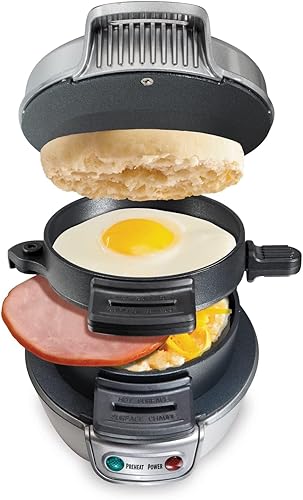


How the Plates Work Differently
Sandwich makers have fixed, shallow die-cut plates, usually in a triangular or rectangular shape, that press into the bread and pinch the edges shut. This seals in the filling and creates that familiar crispy pocket shape. Panini presses use either grooved grill plates or flat smooth plates mounted on a floating hinge, which means the top plate adjusts to the thickness of whatever you are pressing. The floating hinge is what lets a panini press handle a thick focaccia or a stacked club without burning the outside before the inside heats through. If the plate design does not match your bread, you will either get a mess or an undercooked center.
Wattage and Heat Speed
Wattage is the clearest spec to compare before buying. Entry-level sandwich makers typically run 600 to 750 watts, enough to heat thin sliced bread with a single layer of cheese in three to four minutes. A step-up panini-style machine runs 1000 to 1200 watts, which gets the nonstick plates hotter faster and handles denser fillings like chicken breast or roasted vegetables without dropping temperature mid-cook. The Hamilton Beach 25475 is rated at 600 watts and weighs just 3.1 pounds, making it a compact option for basic sandwich use. The Hamilton Beach 25490MNA runs at 1200 watts and comes in at 4.8 pounds, giving you noticeably more pressing power for thicker builds. If you see wattage below 600, expect slow preheating and uneven browning.
Size, Footprint, and Storage
Sandwich makers are compact by design. The Hamilton Beach 25475 measures 7 by 7 by 9 inches and can stand upright in a cabinet. Panini presses sit wider and lower, lying flat on the counter, and the Chefman RJ02-180-4-R, for example, measures 12 by 13.5 by 5.25 inches, which is nearly twice the footprint. That extra size gives you more cooking surface and lets you press a full-length baguette half or two sandwiches side by side. If counter space is tight or you live in a smaller kitchen, the sandwich maker wins on storage. If you cook for more than one or two people regularly, the larger surface area of a panini press pays off quickly.
Plate Material and Cleanup
Both types commonly use nonstick coatings, but the material underneath varies. You will find plastic-bodied sandwich makers at lower price points and stainless steel housing on mid-range panini presses. The Chefman RJ02-180-4-R uses stainless steel construction, which holds up better to daily use than plastic shells. Fixed plates on basic sandwich makers wipe clean with a damp cloth but cannot be submerged. Removable plates, available on some panini press models, let you rinse the cooking surface under the tap, which is a meaningful convenience difference if you cook cheesy or fatty fillings often. Always check whether plates are removable before buying if cleanup is a priority for you.
What Each One Actually Makes Well
Sandwich makers excel at quick, sealed hot pockets: grilled cheese on white bread, breakfast egg pockets, quesadillas cut to size. The sealed edges keep runny fillings from dripping and speed up cooking by trapping steam. Panini presses handle all of that plus open-face press cooking, thin chicken cutlets, sliced vegetables, and any bread thicker than standard sliced sandwich bread. A panini press with smooth plates can also function as a contact griddle for eggs or bacon in a pinch. If your recipe list extends beyond basic sandwiches, the panini press is the more capable countertop appliance and is worth the modest extra cost.
Price Range and Who Each One Suits
Reliable sandwich makers start around $18 to $30 for home use. The Hamilton Beach 25475 at $29.95 has over 45,000 buyer ratings at 4.4 stars, which signals consistent real-world satisfaction at that price. Panini presses for home kitchens generally run $35 to $150, with the Chefman RJ02-180-4-R at $34.95 sitting at the practical entry point for a stainless steel panini-style machine with over 8,000 ratings at 4.5 stars. Budget buyers who only want hot sandwiches two or three times a week do not need to spend more than $30. Cooks who want a more versatile countertop tool that earns daily use should aim for the $35 to $55 range in the panini press category.
Common mistakes to avoid
- Buying a sandwich maker expecting it to handle thick artisan bread, which it cannot seal or press evenly.
- Ignoring wattage and then wondering why fillings are cold in the middle after the bread browns.
- Assuming all panini presses have removable plates; many do not, which makes cleaning grooved plates a chore.
- Overfilling a sandwich maker past the plate depth and causing fillings to spill and burn onto the heating element.
- Choosing the cheapest option without checking plate material, then dealing with sticking and flaking within a few months.
- Not preheating the appliance before loading the sandwich, which leads to uneven cooking and soggy bread on the bottom.
Frequently asked questions
Can a sandwich maker work as a panini press?
Not really. A sandwich maker seals and crimps the bread edges, which limits it to standard sliced bread and thin fillings. It cannot accommodate ciabatta, thick rolls, or anything that needs height adjustment as a panini press floating hinge provides. For the occasional basic grilled cheese it is fine, but for anything thicker you will get burnt edges and an unheated center.
What wattage do I need for a panini press?
For home use, 1000 to 1200 watts is the practical sweet spot. That range gets the plates hot enough to brown bread in two to three minutes while pressing through fillings like chicken or mozzarella without a temperature drop. Units below 750 watts tend to take longer and produce paler results on dense breads. Commercial-grade machines start at 1800 watts and above, which is more than a home cook needs.
Are the plates on sandwich makers and panini presses nonstick?
Most consumer models in both categories use nonstick coated plates, but the coating quality varies by price. Budget sandwich makers at the $18 to $25 range sometimes use thinner coatings that wear faster, especially if you use metal utensils to pry out the sandwich. Mid-range panini presses with ceramic or reinforced nonstick surfaces tend to hold up better over time. Always use silicone or wooden tools and avoid abrasive scrubbing to extend plate life.
Which is easier to clean, a sandwich maker or a panini press?
A basic sandwich maker with fixed plates is simple to wipe down since the flat sealed surface leaves little residue if you do not overfill it. A grooved panini press can be harder to clean because cheese and oils collect in the ridges. Models with removable plates solve that problem entirely since you can rinse them in the sink. If easy cleanup matters to you, look for removable plates on whichever style you choose rather than picking based on sandwich maker versus panini press alone.
Is a panini press worth buying if I already own a cast iron skillet?
A cast iron skillet with a heavy lid or a second pan pressed on top can replicate panini results, so the overlap is real. A panini press adds convenience: it heats both sides simultaneously, maintains consistent pressure, and is faster for weekday lunches. If you press sandwiches three or more times a week, the countertop appliance saves enough time and effort to justify the $35 to $55 cost. If you make paninis once a month, your skillet is probably enough.