How to Choose a Food Steamer That Actually Fits Your Kitchen
Recommended picks


Start With Capacity
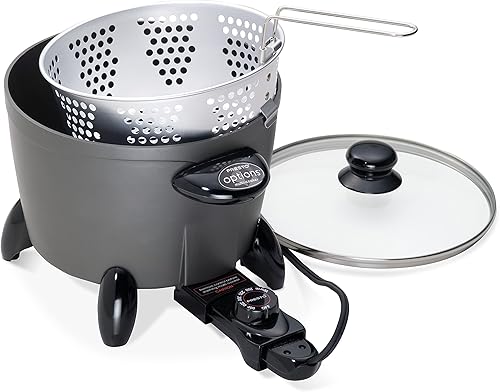
Capacity in quarts tells you how much food fits across all tiers of the steamer at once. A 4 to 6 quart countertop steamer handles one to two servings of vegetables, rice, or fish without wasted energy. For families of four or regular batch cooking, look at 8 quarts and above. The Presto 06003 lands at 6 quarts and earns a 4.6 rating from more than 5,500 buyers, which makes it a reliable benchmark for mid-size households. Going larger makes sense only if you regularly steam proteins and sides at the same time.
Tiers: One vs. Two vs. Three
Most electric food steamers stack two or three removable baskets so you can cook different foods simultaneously without flavor transfer. A single-tier design is compact and fine for reheating leftovers or steaming one side dish. Two tiers let you run vegetables on top and protein or dumplings below, where steam is most intense. Three-tier models push capacity higher and suit meal-prep routines where you want a complete dinner done at once. The Secura DZG-A80A1 reaches 8.5 quarts across its tiers and carries a 4.3 rating from over 1,000 buyers, offering a solid middle ground between size and countertop footprint.
Material: Stainless Steel vs. Plastic
Basket material affects durability, odor retention, and how well the steamer holds up over years of use. Plastic baskets cost less and are lighter, but they can absorb smells from strongly flavored foods like fish or garlic over time. Stainless steel baskets resist odors, tolerate acidic foods without staining, and generally last longer. The WMF 415090011, built from alloy steel and rated 4.3 stars by more than 2,200 buyers at around $182, shows how a well-made metal steamer justifies a higher price for regular cooks. If you steam fish or citrus-marinated proteins often, stainless is worth the upgrade.
Controls and Presets
Basic steamers use a simple dial or single button with a countdown timer, which is all most home cooks ever need. More advanced countertop models add digital displays and preset programs for vegetables, grains, or seafood, which take the guesswork out of timing. Presets are genuinely useful if you are new to steaming or want consistent results without watching the clock. That said, even a simple 30-minute analog timer covers the vast majority of steaming tasks, so do not pay extra for digital controls unless you will actually use them.
Cleanup and Maintenance
Food steamers accumulate mineral deposits in the water reservoir over time, especially in areas with hard tap water. Look for a model with a removable drip tray and a water reservoir you can access easily for descaling. Dishwasher-safe baskets save real time if you cook every day. Also check whether the lid and trays are dishwasher safe before you buy, since hand-washing multiple tiers after every meal adds friction. Running white vinegar through the reservoir every few weeks clears scale buildup and keeps steam output strong.
Countertop Footprint and Storage
Electric steamers are taller than they are wide, so vertical clearance under your cabinets matters more than counter depth. A three-tier model can easily stand 14 to 16 inches tall when assembled, which clears the lower shelves in many kitchens. If storage space is tight, choose a model with nesting baskets that collapse flat when not in use. Weight is also worth checking if you move appliances in and out of a cabinet regularly. A unit weighing 6 to 7 pounds is easy to lift one-handed, while heavier commercial-leaning models are better left in a fixed spot.
Common mistakes to avoid
- Buying a steamer that is too large for a one or two-person household, which wastes water and energy on every use.
- Ignoring the water reservoir capacity, then running out of steam halfway through cooking a longer meal.
- Choosing plastic baskets without considering long-term odor retention from fish or strongly spiced foods.
- Stacking tiers without adjusting cook time, since the top tier steams slower than the bottom tier closest to the water.
- Skipping descaling until steam output drops noticeably, rather than running a vinegar cycle every few weeks.
- Confusing total capacity with per-tier capacity, then discovering each basket holds less food than expected.
Frequently asked questions
How much capacity do I need in a food steamer?
For one to two people, a 4 to 6 quart countertop steamer covers most meals without wasting energy. Families of four or households that batch-cook should look at 8 quarts or more. Keep in mind that total capacity is split across multiple tiers, so a 9 quart model might give you roughly 4.5 quarts per basket.
Is stainless steel better than plastic for food steamer baskets?
Stainless steel resists odors, handles acidic or strongly flavored foods without staining, and holds up better over years of daily use. Plastic baskets are lighter and less expensive, but they can absorb smells over time. If you steam fish, garlic, or citrus-heavy dishes regularly, stainless is the better long-term choice.
Do I need a food steamer with preset programs?
Not necessarily. A basic timer dial works well for most home cooks because steaming times are simple to learn: most vegetables take 5 to 12 minutes, fish fillets 8 to 12 minutes, and dumplings 10 to 15 minutes. Digital presets are convenient if you want set-and-forget simplicity, but they are not a reason to spend significantly more.
How do I descale a food steamer?
Fill the reservoir with equal parts white vinegar and water, run a full steam cycle, then rinse thoroughly with fresh water and run one more plain water cycle before cooking food. Doing this every two to four weeks prevents mineral deposits from reducing steam output. In areas with very hard water, descale more frequently.
Can I cook different foods at the same time in a multi-tier steamer?
Yes, that is one of the main advantages of a tiered countertop steamer. Place longer-cooking items like root vegetables or thicker cuts of fish on the bottom tier closest to the water source, and quicker items like leafy greens or already-blanched foods on top. Stagger your start times if cook times differ by more than five minutes.