Are Air Fryers Healthy? A Straightforward Look at the Facts
Recommended picks


How an Air Fryer Actually Cooks
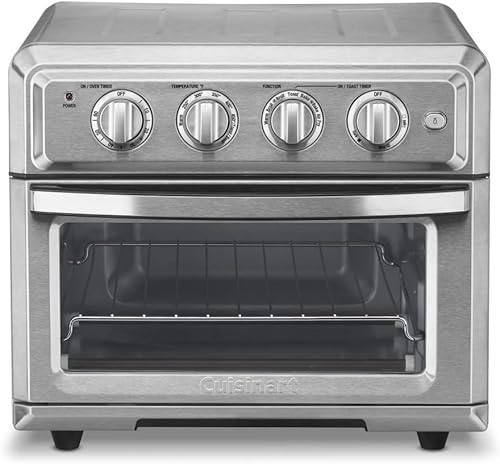
An air fryer is a compact countertop convection oven. A heating element and a high-speed fan push hot air around the food at temperatures typically ranging from 180 to 400 degrees Fahrenheit or higher. The moving air strips surface moisture quickly, which creates the browning and crunch people associate with frying. Because the food sits in a basket rather than a vat of oil, you can use a light spray or no oil at all depending on the recipe. The Cuisinart TOA-60ES, rated 4.4 stars across more than 27,000 reviews, runs at 1,800 watts with a maximum temperature of 450 degrees Fahrenheit, which gives it enough power to brown chicken thighs or roast vegetables without needing a drop of added fat.
Fat and Calorie Reduction Compared to Deep Frying
Deep frying absorbs oil into the food during cooking, adding a substantial amount of fat and calories beyond what the ingredient itself contains. Air frying skips that absorption step. Researchers have published comparisons showing that air-fried foods can contain considerably less fat than their deep-fried counterparts, with some studies citing reductions in the range of 70 to 80 percent for added oil content. The actual calorie difference depends on how much oil you use in the air fryer, the food type, and cooking time. For home cooks who regularly make breaded chicken, fries, or fish fillets, the shift to an air fryer basket with a light oil spray is a practical way to lower weekly fat intake without giving up texture.
Nutrients, Acrylamide, and Things Worth Knowing
High heat cooking of any kind, including air frying, can affect heat-sensitive vitamins such as vitamin C. However, shorter cook times in an air fryer can partially offset that loss compared to longer oven roasting. One legitimate concern is acrylamide, a compound that forms when starchy foods like potatoes are cooked at high temperatures. Air frying can produce acrylamide at levels that vary depending on temperature and cook time, though studies suggest air-fried foods generally produce less acrylamide than deep-fried ones. Keeping temperatures moderate and not cooking starchy foods until heavily browned are simple ways to minimize formation. For most home cooks, the net tradeoff still favors air frying over deep frying.
What the Basket and Nonstick Coating Mean for Health
Most air fryer baskets use a nonstick coating, which reduces the need for added fat and makes cleanup straightforward. The quality of that coating matters: a scratched or degraded nonstick surface can flake into food, so replacing a basket or the unit when the coating shows visible damage is a reasonable precaution. Larger-capacity models like the Nuwave 15.5-Qt X-Large Family Size (4.4 stars, 16,200 reviews, 1,500 watts) give you enough room to spread food in a single layer, which is important because crowding the basket traps steam and produces steamed rather than crisped results. Single-layer cooking is a genuine technique point, not a minor detail.
Foods That Benefit Most From Air Frying
Proteins like chicken wings, drumsticks, and salmon fillets come out well because the circulating air renders surface fat and firms the exterior without added oil. Vegetables including broccoli, cauliflower, brussels sprouts, and zucchini develop roasted flavor in less time than a conventional oven typically requires. Frozen items that instruct oven heating, such as breaded shrimp or vegetable patties, work reliably in an air fryer at similar or slightly lower temperature settings. Foods that are inherently low in fat and high in water content, such as leafy greens, do not air fry well because they dry out or blow around in the basket. The appliance suits firm, moderate-density foods best.
Choosing a Model With Health-Friendly Cooking in Mind
If you plan to cook lean proteins and vegetables regularly, prioritize wattage and capacity. Higher wattage means faster preheat and more consistent temperature, which reduces the temptation to crank heat and overbrown food. The Nuwave 6QT Brio (4.4 stars, 3,300 reviews, 1,800 watts, 6-quart capacity, nonstick basket) is a compact option for one to three people that handles everyday air frying without a large countertop footprint. For families cooking larger batches, a model in the 12 to 15 quart range gives you room to avoid the crowding that forces you to cook in multiple rounds at higher heat. Touch controls make it easier to set precise temperatures, which matters when you want to stay below the threshold where excessive browning occurs.
Common mistakes to avoid
- Crowding the basket so food steams instead of crisps, which leads to uneven texture and longer cook times at higher heat
- Setting the temperature too high to compensate for crowding, which increases browning and acrylamide formation on starchy foods
- Skipping the oil entirely on lean proteins, which causes them to dry out rather than develop a crisped exterior
- Using the air fryer to justify eating larger portions of fried foods, which offsets the fat reduction benefit
- Continuing to use a basket with visible nonstick damage instead of replacing it
- Not patting food dry before air frying, which adds surface moisture that delays browning and extends cook time
Frequently asked questions
Does air frying actually reduce calories compared to deep frying?
Yes, in a meaningful way. Deep-fried food absorbs oil during cooking, adding fat calories on top of the food's own calorie count. Air frying uses little to no added oil, so you avoid most of that absorption. The base food still has the same calories, but the method adds far fewer on top.
Are air fryers safe to use every day?
For most people, daily use of an air fryer is not a concern. The main practical consideration is the condition of the nonstick basket coating. Inspect it periodically and stop using it if the surface chips or flakes. Beyond that, the cooking method itself is no different in safety terms from a conventional countertop convection oven.
Can I air fry vegetables without any oil?
You can, and some vegetables like cherry tomatoes or thin asparagus spears come out reasonably well with no oil. However, most denser vegetables benefit from a light coating of oil, roughly a teaspoon or less, because oil helps transfer heat to the surface evenly and improves browning. Without it, the exterior can dry out before the interior finishes cooking.
Is food from an air fryer better for you than oven-baked food?
Not necessarily by a wide margin. Both methods can produce low-fat results. The main advantage of an air fryer over a standard oven is speed: faster cook times mean slightly less exposure to sustained heat, which can help preserve heat-sensitive nutrients. For practical everyday cooking, the nutritional difference between an air fryer and a well-used conventional oven is minor.
What capacity air fryer do I need for a healthy cooking routine?
A 6-quart basket handles meals for two to three people comfortably without crowding. If you cook for four or more, a model in the 12 to 15 quart range lets you cook a full sheet of vegetables or a larger protein in one pass rather than batches. Cooking in a single layer is the single biggest factor in getting properly crisped, evenly cooked food from an air fryer.