Divided vs Single Hot Pot: Which Style Is Right for Your Table?
Recommended picks

What a Divided Hot Pot Actually Does
A divided electric hot pot has a fixed divider running across the center of the basin, creating two separate compartments that sit over one heating element or two independent zones. Each side holds a different broth, so one person can go spicy Sichuan while another sticks with a mild chicken base. Because the two sides share the same countertop footprint, a divided pot often has less total capacity per compartment than a same-size single pot. The divider is usually not removable, so you cannot convert it into a single-broth pot once you buy it.
What a Single Hot Pot Offers
A single hot pot is one open basin, one broth, and one set of temperature controls. That simplicity translates to more usable cooking space per quart of stated capacity, because there is no divider eating into the interior. Single pots also tend to cost less, weigh less, and wash faster. If everyone at your table agrees on the same flavor profile, you lose nothing by going single and gain a roomier basket for noodles, tofu, and vegetables. The Audecook AC800, for example, packs 1.6 quarts into a compact 7.6 by 6.8 inch footprint at a 600-watt draw, making it a practical solo or couples option.
Capacity and Footprint Trade-offs
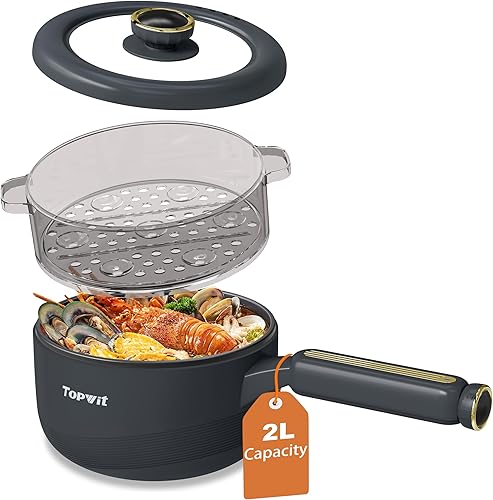
Divided pots are physically larger because they must fit two usable compartments side by side, which means more counter space required. A divided pot rated at three quarts total might deliver only 1.5 quarts per side, which can feel cramped once you add broth and ingredients. Single pots punch above their weight on usable space. The TopWit XK2001-1 delivers 2.1 quarts in a nonstick basin measuring roughly 14.5 inches long, which is enough room for a meaningful amount of produce and protein without a bulky footprint. If counter space is tight in your kitchen, a single pot is almost always the smarter fit.
Who Should Choose a Divided Hot Pot
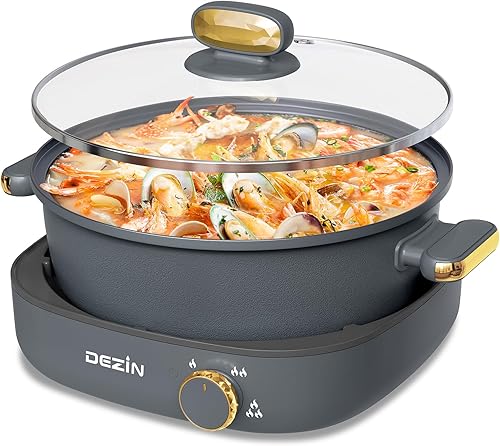
A divided pot earns its place when at least two diners regularly want different flavor profiles at the same meal. Common scenarios include spicy versus mild broth, meat-based stock versus a vegetarian option, or a low-sodium side for someone watching sodium intake. If you frequently host hot pot nights with four or more people who span different spice tolerances, the divided format removes the need to negotiate a single broth compromise. The Dezin XK6406 is one of the larger divided options in this category, measuring 13.6 by 12.7 inches, which gives you meaningful volume on both sides for group cooking.
Cleaning and Maintenance Differences
Single pots are faster to clean because you have one interior surface to wipe or rinse with no crevices around a divider. Divided pots have a seam or groove where the divider meets the basin wall, and broth residue can collect there if you do not rinse promptly after each use. If your pot has a nonstick interior, that coating eases cleanup on both styles, but the divider area on a divided pot still requires attention. For weeknight solo cooking, the lower cleaning burden of a single pot is a real quality-of-life advantage.
Wattage, Temperature, and Heat Control
Most compact single hot pots run at 600 to 1000 watts, which is enough to bring broth to a steady simmer and hold it there for tabletop cooking. The TopWit T1602B-1, for instance, runs at 600 watts with touch controls and a nonstick inner pot, giving you consistent low-and-high heat options in a 1.9-quart basin. Divided pots with two independent heating zones need more wattage to drive both sides and are typically closer to 1200 to 1800 watts. If your outlet circuit is shared with other appliances, check the wattage before buying a divided pot, because higher-draw units can trip a breaker in older kitchens.
Common mistakes to avoid
- Buying a divided pot for solo use and ending up with two half-full, awkward compartments instead of one roomy basin.
- Assuming the stated total capacity of a divided pot equals the usable space per side. Always divide the number in half as a rough guide.
- Neglecting to clean the divider seam after each use, which lets broth residue build up and is harder to remove once dried.
- Choosing a divided pot rated under 1200 watts and finding that one side heats noticeably slower than the other when both are running.
- Picking a single pot that is too small for two people and crowding noodles and vegetables so they cook unevenly.
- Overlooking nonstick interior coatings, which matter more in a divided pot because the narrower compartments make it harder to stir and release stuck food.
Frequently asked questions
Can I use a divided hot pot as a single pot by just filling one side?
Technically yes, but the heating element is designed to serve both compartments, so running only one side may produce uneven heat distribution depending on the model. You also lose the benefit of a full-width basin. If you plan to cook single-broth meals most of the time, a dedicated single pot is a better fit from day one.
Is a divided hot pot worth the extra cost over a single pot?
It depends entirely on how often you need two separate broths. If that situation comes up regularly, the divided format adds real value. If it would be an occasional thing, a single pot at a lower price point serves most households better, and you can always keep two separate broths in sequence by rinsing between uses.
What capacity should I look for in an electric hot pot for two people?
For two people sharing one broth, a single pot in the 2.0 to 2.5 quart range is comfortable for a standard meal with noodles, protein, and vegetables. If you want a divided pot for two people, aim for at least 3.0 quarts total so each side has enough room to be practical. Going smaller than that can make ingredient management frustrating.
Do divided hot pots take longer to heat up than single pots?
Higher-wattage divided pots generally heat up quickly, but if a divided model shares one lower-wattage element across both sides, expect a longer preheat compared to a single pot of similar total capacity. Check the wattage spec and read buyer reviews for real-world heat-up times before purchasing.
Are nonstick coatings important in a hot pot?
A nonstick inner surface makes a meaningful difference for both cooking and cleanup, especially with starchy ingredients like noodles or tofu that can stick to bare metal or ceramic during a long simmer. It matters even more in a divided pot where the compartments are narrower and harder to scrub. Look for a nonstick or ceramic inner coating when comparing models.