Small Kitchen Cooking Appliances That Are Actually Worth the Counter Space
Counter space is precious, so here is how to decide which cooking appliances deserve a permanent spot in your kitchen.
Walk through any kitchen store and you will find dozens of small appliances promising to change the way you cook. Some of them genuinely do, and some of them end up in the back of a cabinet after three uses. The difference usually comes down to how well an appliance fits your actual cooking habits, not how many features it has. Before you spend money on something new, it helps to ask a few honest questions about how often you will really use it and whether it does something your existing tools cannot.
Products mentioned in this post


Start With What You Cook Most
The best small appliance is one you reach for several times a week. If you fry a lot of food or cook frozen snacks regularly, an air fryer fills a real gap by cutting oil use and speeding up cooking time. If you make breakfast for a crowd on weekends, an electric griddle gives you a lot more surface than a stovetop pan. Think about the meals you actually make, not the ones you imagine making after you own a new gadget.
Does It Replace Something or Just Add Clutter?
An appliance earns its spot when it genuinely replaces a slower or messier method. An air fryer can stand in for your oven for many smaller meals, which also saves energy. An electric skillet can handle everything a frying pan does plus keep food warm at the table. If an appliance only does one thing you do maybe twice a year, it is probably not worth the drawer space. Ask yourself what you would stop using once you own it.
Counter Space vs. Cabinet Storage
Some appliances are too bulky to put away every time, so they need a permanent spot on the counter. A large air fryer oven, for example, can run 13 to 16 inches wide and weigh over 20 pounds, which makes it more of a countertop fixture than a pull-out tool. Smaller basket-style air fryers in the 5 to 7 quart range are easier to slide into a cabinet if you have limited counter space. Measure before you buy and be realistic about whether you will actually put it away or leave it out.
Air Fryers: One of the Most Versatile Picks
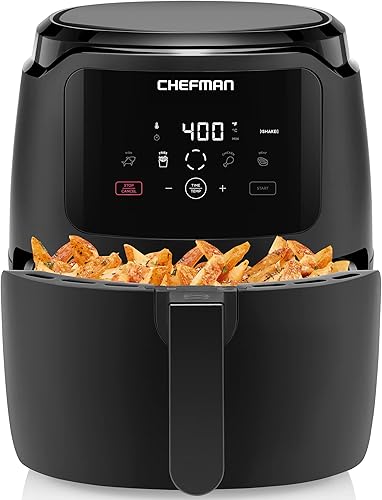
For most kitchens, an air fryer offers the best return on counter space. It handles frozen foods, roasted vegetables, chicken, fish, and reheated leftovers better and faster than a conventional oven for small batches. A 5 to 8 quart basket model is a solid choice for one to four people, while families will want something in the 12 to 16 quart range. Models like the Gourmia GAF716 (7 qt, 1,700 W, rated 4.6 stars across nearly 1,900 reviews) and the Chefman RJ38-2 (5 qt, 1,500 W, 4.6 stars from over 4,300 buyers) show that you do not need to spend a lot to get a reliable unit. If you cook for a bigger household, the Nuwave 15.5-Qt Brio (15.5 qt, 1,500 W, 4.4 stars from over 16,000 reviews) gives you room for a full meal in one go.
Appliances Worth Skipping for Most People
Egg cookers, quesadilla makers, and single-use sandwich presses are hard to justify unless you eat that specific food almost every day. A regular pan handles most of what they do. Electric can openers, rice cookers with one-touch settings, and milk frothers fall into a similar gray zone for most households. The test is simple: if you can replicate the result in under two extra minutes with what you already own, the appliance is probably optional.
How to Evaluate Before You Buy
Check the wattage so you know whether it will trip a circuit if you run it alongside other appliances. Look at how easy the parts are to clean, since removable dishwasher-safe components save a lot of time. Read through recent reviews specifically for complaints about durability after six months of regular use, not just first impressions. Finally, check the dimensions against your cabinet or counter and give yourself an extra inch on each side for heat and airflow.
A Simple Rule for Any Buying Decision
If you can imagine reaching for an appliance at least once a week, it is probably worth buying. If you have to talk yourself into use cases, it probably is not. The most used small appliances in most kitchens are the ones that shorten cooking time or cut cleanup, not the ones with the longest feature lists. Buy for the cooking you already do, and the appliance will pay for itself quickly.
Frequently asked questions
What is the most useful small cooking appliance for a small kitchen?
For most people, an air fryer offers the widest range of uses per square inch of counter space. It handles roasting, crisping, reheating, and cooking frozen foods without heating up a full oven. A 5 to 7 quart basket model fits in most kitchens without taking over the counter.
How do I know if a small appliance is worth buying?
Ask whether you would use it at least once a week based on what you already cook. If the answer is yes, and it does something faster or better than your current tools, it is a good candidate. If you are inventing reasons to use it, skip it.
Are larger air fryers worth the extra counter space?
For families of four or more, a larger model in the 12 to 16 quart range can cook a full meal in one batch, which makes it genuinely more useful despite the footprint. For one or two people, a compact 5 to 6 quart unit is usually enough and much easier to store.
What should I check before buying a countertop appliance?
Measure your available counter or cabinet space first, then compare it to the product dimensions. Check the wattage to make sure your outlet can handle it alongside other appliances. Look at how the parts clean up, since hard-to-clean appliances often end up unused after a few weeks.
Is it better to buy one multi-use appliance or several single-use ones?
A single appliance that does several things well is almost always a better use of counter space and budget than a collection of single-use gadgets. Air fryer ovens, for instance, can roast, toast, bake, and air fry, which covers a lot of ground. The trade-off is that multi-function models are often larger and more expensive.