Panini Press vs Skillet: Which Makes a Better Pressed Sandwich?
Both tools can make a great pressed sandwich, but they work very differently, and knowing which fits your kitchen saves you money and counter space.
A hot, crispy pressed sandwich sounds simple enough, but the tool you use changes the result more than most people expect. A panini press applies heat from both sides at once and adds those familiar grill marks, while a skillet relies on a single hot surface and a little patience. Neither is wrong, but each has a real sweet spot. This guide walks through what each tool does well so you can decide which one belongs in your kitchen.
Products mentioned in this post


How a Panini Press Works
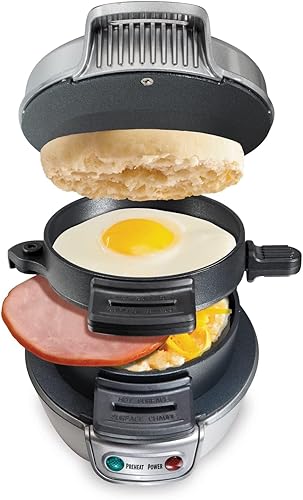
A panini press has two heated plates that clamp down on the sandwich from the top and bottom at the same time. This two-sided heat melts cheese faster, seals the bread evenly, and cuts total cook time roughly in half compared to flipping in a pan. Most home presses run between 600 and 1,500 watts, and higher wattage generally means faster heat-up and better searing. The hinged lid applies light pressure automatically, so you get that compact, pressed shape without any effort. Many models like the Hamilton Beach 25490MNA also open flat to work as a contact grill for chicken or burgers.
How a Skillet Handles Pressed Sandwiches
A skillet cooks the sandwich from one side at a time, which means you need to flip it and usually press down with a spatula or a second heavy pan to get even browning. It takes a bit more attention, but a skillet gives you more control over how dark the bread gets since you can see the underside directly. Cast iron and stainless skillets hold heat very well and can produce a deeply golden crust that a press sometimes misses at lower wattages. You are also not limited by plate size, which matters if you like a large sandwich or a thick ciabatta.
Results: Grill Marks, Melt, and Crispness
A panini press gives you true grill marks on both faces at once, and the clamping action pushes ingredients together so cheese melts into every layer. The result looks like what you would order at a cafe. A skillet produces a flat, evenly browned surface with no ridges, which some people actually prefer because the whole face of the bread gets golden contact heat instead of just the raised lines. For a basic grilled cheese, the skillet often wins on overall crispness. For a layered Italian-style panini with cured meats and melted provolone, the press has the edge because the simultaneous top and bottom heat handles thick fillings more reliably.
Cleanup and Convenience
Cleanup is where the panini press has a clear disadvantage if the plates are not removable. Grease and cheese drip into ridges that are awkward to reach with a sponge. Models with removable, dishwasher-safe plates, like the Chefman RJ02-180-4-R, solve that problem almost entirely. A skillet is flat and simple to clean with warm soapy water or a wipe if it is well-seasoned cast iron. If quick cleanup matters to you daily, a skillet or a press with removable plates is the better call. A press with fixed plates requires a little more scrubbing time.
Cost and Counter Space
A good home panini press starts around $20 and goes up from there based on wattage and plate size. The Hamilton Beach 25475, rated 4.4 stars across more than 45,000 reviews, is available for under $30 and handles everyday sandwiches well. A skillet is something most people already own, so the cost is essentially zero if you are comparing tools you need to buy versus tools already in the drawer. If counter space is tight, a skillet stores flat in a cabinet, while a press needs a dedicated spot or a cabinet deep enough to stand it upright.
Which One Should You Buy?
Get a panini press if you make pressed sandwiches regularly, value the hands-off convenience of two-sided heat, or want to double the appliance as a contact grill. The Chefman RJ02-180-4-R at around $35 and the Hamilton Beach 25490MNA at around $50 are both well-reviewed options that float between entry-level and mid-range. Stick with your skillet if you only make a grilled cheese occasionally, already have good nonstick or cast iron cookware, and do not want another appliance to store. A heavy-bottomed skillet with a lid propped on top to trap heat can mimic the press effect surprisingly well for simpler sandwiches.
Tips for Getting Great Results from Either Tool
Regardless of which tool you use, butter or mayo on the outside of the bread makes a bigger difference than the appliance itself. Medium heat is almost always the right call since high heat browns the bread before the cheese has time to melt. For thicker sandwiches in a skillet, cover it with a lid for the first minute to trap heat and speed up the melt. In a panini press, avoid overstuffing or the lid will not close evenly and one side will cook faster than the other. Let the press fully preheat before the sandwich goes in, even if the indicator light seems quick.
Frequently asked questions
Can I use a regular pan instead of a panini press?
Yes, a heavy skillet works well for most pressed sandwiches. Place the sandwich in the pan over medium heat and press down firmly with a spatula or set a second pan on top as a weight. Flip once the first side is golden. You will not get grill marks, but the result is a crispy, evenly browned sandwich.
Do panini presses work on thick bread like sourdough?
They do, but you may need to leave the press slightly open rather than fully clamped if the bread is very thick. Most home presses have a floating hinge that adjusts to different thicknesses. Just make sure the top plate is still making contact with the bread so both sides get heat.
Is a panini press worth buying if I only make sandwiches once or twice a week?
It can be, especially if you find a model with removable plates that doubles as a contact grill. A $30 to $50 press earns its counter space quickly if you use it for chicken, vegetables, or quesadillas as well. If sandwiches are the only use case, your skillet may be enough.
What is the difference between a sandwich maker and a panini press?
A sandwich maker typically has triangle or pocket-shaped plates that seal and cut the sandwich into two sealed pockets, which is great for keeping fillings inside but produces a different texture. A panini press has flat or ridged plates that press the whole surface of the bread without sealing the edges, giving you the cafe-style look and an open edge.
How do I keep cheese from sticking to the top plate of a panini press?
A light coat of cooking spray or a thin wipe of butter on the top plate before it heats up prevents most sticking. Also, keeping fillings away from the very edge of the bread helps, since overflow is the main cause of stuck cheese. If your model has removable nonstick plates, most residue wipes off easily once the press cools.