How to Make Smooth Cheese Fondue at Home
With the right cheese blend and a few simple tricks, smooth fondue is easier than you think.
Cheese fondue looks impressive but it comes together in about 20 minutes once you know the basics. The two things that trip people up are choosing the wrong cheese and running the heat too high, both of which lead to a greasy, broken pot. Get those two things right and everything else falls into place. This guide walks you through the whole process from cheese selection to keeping it smooth at the table.
Products mentioned in this post


Choose the Right Cheese
The classic Swiss choice is Gruyere, and for good reason. It melts evenly, has a nutty flavor that people recognize, and holds together without going grainy. Many recipes blend Gruyere with Emmental, which lightens the flavor and adds a bit of stretch. Avoid pre-shredded bags if you can, because the starch coating added to prevent clumping can make the fondue gritty. Buy a block and grate it yourself on the large holes of a box grater. For a sharper fondue, swap a quarter of the Gruyere for sharp white cheddar, though stay with mostly classic Swiss for best melt.
The Cornstarch Trick
Before anything goes in the pot, toss your grated cheese with a tablespoon of cornstarch per pound of cheese. The cornstarch coats the proteins and keeps the fat from separating out as the cheese heats up. This is the single most reliable thing you can do to prevent a greasy or broken fondue. Do not skip this step even if a recipe you find online leaves it out. Some recipes use flour instead, which works but requires a bit more cooking time to lose the raw taste.
Pick the Right Liquid
Traditional Swiss fondue uses dry white wine as the liquid base. The acidity in the wine helps keep the cheese emulsified as it melts, which is why wine actually matters here beyond flavor. A dry Swiss or French white like Sauvignon Blanc or Pinot Gris works well. Warm the wine in the fondue pot over medium heat until it just starts to steam, then add the cheese a handful at a time while stirring in slow figure-eight motions. If you prefer a non-alcoholic version, use a mix of low-sodium chicken broth and a tablespoon of lemon juice to replicate the acidity.
Heat Control Is Everything
The number one cause of broken fondue is too much heat. You want the pot to stay in the 120 to 140 degrees Fahrenheit range, which is a gentle melt, not a simmer. An electric fondue pot is a big advantage here because you can set a precise dial and hold the temperature steady throughout the meal. Once the cheese is fully melted, turn the heat down to the lowest setting that keeps it fluid. If the fondue starts to bubble aggressively, pull the pot off or cut the heat immediately.
Fixing a Broken or Lumpy Fondue
If your fondue separates into a greasy puddle with lumps, do not panic. Take the pot off heat, add a splash of warm wine, and stir vigorously in small circles. The added liquid and agitation can bring a broken fondue back together most of the time. If it went lumpy before separating, mix a teaspoon of cornstarch with a tablespoon of cold white wine, stir it into the pot, and keep stirring over low heat. Fondue that gets too thick as the night goes on can also be loosened with a small splash of warm wine.
What to Dip
Cubed crusty bread is the traditional choice, and it works so well because the crust holds up to the hot cheese without falling off the fork. Day-old bread is actually better than fresh because it is a little firmer. Beyond bread, steamed broccoli, blanched cauliflower, sliced apples, cornichons, and boiled baby potatoes all make excellent dippers. Keep dippers bite-sized, around one inch, so they coat evenly and do not cool the pot down too fast when you dip.
Serving Tips for an Electric Fondue Pot
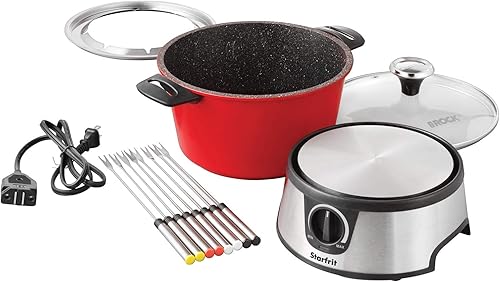
Electric fondue pots with adjustable temperature controls make the whole process far more forgiving than open-flame setups. Set the dial to a medium-low setting once the cheese is melted and let guests serve themselves at their own pace. Stir the pot occasionally to keep the cheese moving and prevent any scorching on the bottom. If you notice a crust forming on the bottom, that is actually considered a delicacy in Switzerland, called la religieuse, so no need to worry about it. A 3-quart pot is a comfortable size for four to six people.
Frequently asked questions
Why does my cheese fondue turn grainy?
Grainy fondue usually means the heat was too high or the cheese was added too fast. Overheating causes the proteins to seize up and separate from the fat. Add cheese in small handfuls over medium-low heat and stir constantly, and you should get a smooth result.
Can I make cheese fondue without wine?
Yes. Substitute dry white wine with a mix of low-sodium chicken or vegetable broth plus a tablespoon of fresh lemon juice. The lemon juice provides the acidity that helps keep the cheese emulsified. The flavor will be a little milder but the texture should still be smooth.
How do I keep fondue warm for a long dinner?
An electric fondue pot set to the lowest warm setting is the easiest solution. Stir the pot every few minutes to keep heat even. If it starts to thicken, add a small splash of warm wine or broth and stir it in.
What is the best cheese blend for fondue?
A 50/50 mix of Gruyere and Emmental is the traditional starting point and it works reliably well. You can shift the ratio toward more Gruyere for a stronger flavor, or add a small amount of sharp white cheddar if you want a bit more bite. Avoid soft cheeses like brie or very young cheeses, as they do not melt cleanly.
How much cheese do I need per person for fondue?
A good rule of thumb is about 4 to 6 ounces of cheese per person as a main course, or around 3 ounces per person if fondue is one of several dishes. For a group of four eating fondue as dinner, plan on about 1.5 pounds of grated cheese total.