How to Clean an Electric Fondue Pot (Without Ruining It)
A few simple habits after each fondue night will keep your pot clean, odor-free, and ready for the next party.
Fondue nights are fun right up until you look at the pot afterward. Hardened cheese, scorched chocolate, and greasy broth residue can make cleanup feel like a bigger project than the cooking. The good news is that most electric fondue pots come apart easily, and with the right approach you can have everything clean in under 20 minutes. This guide walks you through the whole process, from cooling down safely to tackling stubborn stuck-on buildup.
Products mentioned in this post


Let the Pot Cool Completely Before You Touch It
Always unplug the fondue pot and give it at least 30 minutes to cool before you start cleaning. Pouring cold water into a hot pot can warp the base or crack a ceramic insert. If you are in a hurry, letting it sit on a heat-safe surface with the lid off speeds cooling without any risk. Never submerge the electric base or cord in water, no matter how tempted you are to just rinse the whole thing.
Disassemble All the Parts First
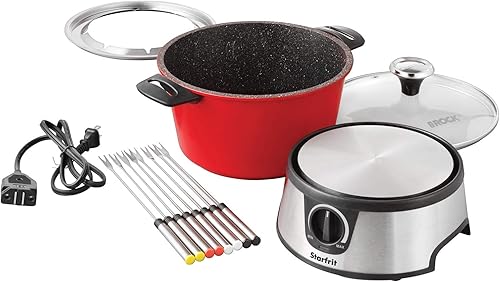
Most electric fondue pots separate into a pot or insert, a lid, forks, a fork ring or stand, and a heated electric base. Take everything apart before you start washing. The pot insert is usually the only piece that actually touches food, and it is often the only part that can go in the dishwasher or get soaked. Keep the base, cord, and heating element well away from water at all times. Checking your manual for which parts are dishwasher-safe takes about 30 seconds and can save you from a ruined pot.
Cleaning After Cheese Fondue
Cheese hardens fast once it cools, so it helps to fill the insert with warm water and a small squirt of dish soap right after the meal, while the residue is still soft. Let it soak for 10 to 15 minutes, then wipe out the interior with a soft cloth or non-scratch sponge. For stubborn spots, a paste of baking soda and water applied for a few minutes loosens cheese residue without scratching nonstick coatings. Rinse thoroughly and dry before reassembling, because trapped moisture can cause odors or rust on metal parts.
Cleaning After Chocolate or Caramel Fondue
Chocolate and caramel fondue leave a sticky, sweet film that can turn tacky if you let it sit too long. Warm water is your best friend here because chocolate melts easily with gentle heat. Fill the insert with warm, soapy water and let it sit for about 5 minutes, then wipe clean. Avoid very hot water on nonstick coatings because repeated exposure to boiling water can shorten the life of the finish. A silicone spatula is handy for scraping out leftover chocolate before soaking, so you are not washing more down the drain than necessary.
Cleaning After Broth or Oil Fondue
Broth and oil fondues leave a different kind of mess, often a greasy film with cooked-on protein bits stuck to the sides. Empty the pot of any remaining liquid carefully, since hot oil is a burn risk even after the pot is off. Dish soap cuts through the grease well, so a good soak with a few drops of soap for 10 minutes usually does most of the work. For any charred bits around the rim or on the sides, a soft brush like an old toothbrush gets into corners without scratching. Dry the pot completely before storage, since any leftover moisture mixed with oil residue can go rancid and create unpleasant smells.
Cleaning the Electric Base and Exterior
The base is the one part you should never get wet. Wipe it down with a slightly damp cloth, then immediately follow with a dry cloth to pick up any remaining moisture. If drips or spills have gotten into the control knob area, a cotton swab dipped in a small amount of rubbing alcohol cleans around knobs and crevices safely. The exterior of stainless steel pots responds well to a little stainless steel cleaner or even a tiny bit of baby oil on a cloth to remove fingerprints and water spots. Always wipe in the direction of the grain on brushed stainless to avoid visible scratches.
Removing Stubborn Burnt-On Residue
If soaking and wiping did not get everything, a longer soak of 30 minutes to an hour in warm, soapy water usually finishes the job. For really persistent spots on a nonstick insert, fill the pot with water, set it on a stovetop-safe burner on very low heat if your model allows, and let the warm water loosen the residue from the inside. Never use steel wool, abrasive scrubbers, or harsh chemical cleaners on nonstick surfaces because they remove the coating and shorten the life of the pot. Baking soda paste is the most aggressive cleaner you should use on a coated surface.
Frequently asked questions
Can I put my electric fondue pot in the dishwasher?
It depends on the model. The removable pot insert is dishwasher-safe on many electric fondue pots, but the electric base, cord, and heating element should never go in the dishwasher. The forks and fork ring are usually dishwasher-safe as well. Check your specific model's manual to be sure, since dishwasher heat and detergent can degrade nonstick coatings over time even when a manufacturer says it is allowed.
How do I get rid of the smell after cooking broth or oil fondue?
After washing, fill the insert with water and add a few tablespoons of white vinegar or baking soda, let it sit for 15 to 20 minutes, then rinse and dry completely. Leaving the pot stored with the lid off for a day or two also allows any remaining odors to air out. Storing with a small open box of baking soda nearby helps absorb lingering smells in the cabinet.
My nonstick coating is scratched. Is the pot still safe to use?
Light surface marks from normal use are generally fine, but deep scratches that expose the metal underneath mean the coating is breaking down. At that point it is a good idea to replace the insert or the whole pot. Going forward, always use silicone, wooden, or plastic utensils inside a nonstick fondue pot and avoid abrasive cleaners to make the coating last as long as possible.
How often should I deep-clean my fondue pot?
A thorough wash after every use is the best practice since different fondue types leave different residues. A deeper clean, including wiping down the base and checking the cord for any drips or buildup, makes sense every few uses or at least once a season. If you store the pot for long periods, make sure everything is fully dry before putting it away and consider wrapping it loosely in a cloth to keep dust out.
Can I use vinegar to clean a stainless steel fondue pot?
Yes, white vinegar is safe and effective for removing water spots and light mineral deposits from stainless steel. Dilute it with an equal part of water, wipe it on, let it sit for a minute, then rinse and dry. Avoid leaving straight vinegar on stainless steel for long periods since it can dull the finish over time. For the interior of a nonstick insert, vinegar is fine for odor removal but baking soda paste works better for stuck-on food.