How Much Electricity Do Countertop Cookers Use?
A plain-numbers breakdown of wattage and running costs for the most common countertop cooking appliances.
Countertop cooking appliances have a reputation for being energy-efficient, but that story varies a lot depending on which appliance you are actually using. A compact air fryer and a full-size electric griddle are very different animals when it comes to wattage. Knowing the numbers up front helps you decide whether adding another appliance to your counter is worth it, and gives you a realistic idea of what it will add to your electric bill.
Products mentioned in this post

How Wattage Translates to Real Cost
Your electricity bill is measured in kilowatt-hours, or kWh. One kWh is 1,000 watts running for one full hour. The average US residential rate sits around 16 cents per kWh, though your rate may be higher or lower depending on where you live. To figure out the cost of running any appliance, multiply its wattage by the hours of use, divide by 1,000, then multiply by your rate. A 1,500-watt air fryer running for 20 minutes costs roughly 0.08 cents at that average rate, which is genuinely small. The bigger factor is how often you use the appliance, not just its wattage.
Air Fryers: 1,000 to 1,800 Watts Depending on Size
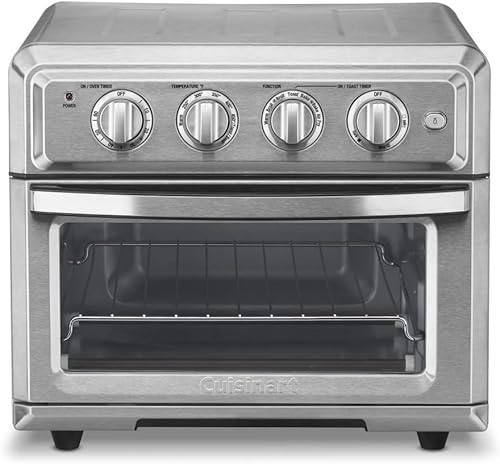
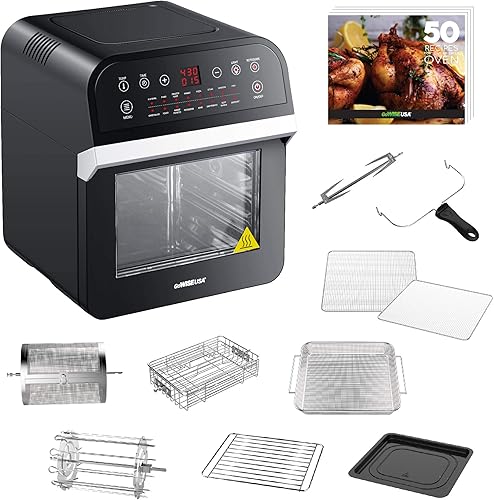
Most air fryers fall in the 1,200 to 1,800 watt range. Compact basket models aimed at one or two people often land around 1,200 to 1,500 watts. Larger oven-style units that can handle a whole chicken tend to use 1,700 to 1,800 watts. For example, the NutriChef PKAIRFR48.5, a 13.7-quart oven-style fryer, draws 1,200 watts, while the Cuisinart TOA-60ES runs at 1,800 watts. The good news is that air fryers cook faster than a conventional oven, so the shorter cook times often balance out the higher wattage. Running a 1,500-watt air fryer for 15 minutes a day every day for a month costs roughly $1.80 at average US rates.
Electric Griddles and Skillets: 1,200 to 1,800 Watts
Full-size electric griddles sit in a similar wattage range to air fryers, typically 1,200 to 1,800 watts for home models. Electric skillets tend to be at the lower end, around 1,200 to 1,400 watts, because the cooking surface is smaller. Griddles reach cooking temperature in a few minutes and cycle on and off to hold it, so they do not draw their rated wattage the entire time they are on. A typical weekend pancake session of 30 minutes on a 1,500-watt griddle costs around 12 cents.
Indoor Electric Grills: 1,200 to 1,800 Watts
Indoor contact grills, the kind with ridged plates that cook both sides at once, generally draw 1,200 to 1,800 watts. Because the heating plates press against both sides of the food, cook times are very short, often 4 to 8 minutes for a chicken breast. That short active cooking window means the real per-meal cost is quite low, even for higher-wattage models. Open-style indoor grills with a single grate tend to use similar wattage but cook more like a one-sided pan.
Deep Fryers: 1,200 to 1,800 Watts, With a Long Preheat
Deep fryers need to bring a large volume of oil up to temperature, which takes longer than heating an air fryer basket. Expect a 5 to 10 minute preheat that draws the full rated wattage before you even add food. Once the oil is at temperature, the thermostat cycles the element to hold it, so actual consumption drops. A 1,500-watt deep fryer running for 25 minutes total, including preheat, would cost about 10 cents per session. The bigger running cost consideration with deep fryers is replacing the oil, not the electricity.
Hot Pots, Steamers, and Fondue Pots: 600 to 1,400 Watts
These appliances tend to use less electricity than fryers and grills because they do not need to generate dry high heat. Electric hot pots commonly draw 800 to 1,200 watts. Food steamers are often in the 600 to 1,000 watt range because they just need to boil a small amount of water. Electric fondue pots are at the low end, sometimes 600 to 800 watts, since they only need to gently melt cheese or chocolate. If you use one of these appliances regularly, you will notice they barely register on your electric bill compared to high-heat appliances.
Which Countertop Cooker Costs the Least to Run?
On a per-meal basis, hot pots and steamers are the cheapest to run because of their lower wattage and moderate cook times. Air fryers are also very cost-effective because their high wattage is offset by short cooking times, and they frequently replace the full-size oven for weeknight meals. Deep fryers and large griddles used for big family meals cost a bit more per session, but the per-serving cost is still low. The honest answer is that for most households, all of these appliances are cheap to run. The difference between the most and least efficient options is rarely more than a few dollars a month.
Frequently asked questions
Do countertop cooking appliances use a lot of electricity?
Compared to a full-size range or oven, no. A standard oven can draw 2,000 to 5,000 watts depending on whether it is gas-assisted or fully electric. Most countertop appliances stay in the 1,000 to 1,800 watt range and finish cooking faster, so the actual energy used per meal is often lower than cooking the same food in your oven.
How do I find the wattage of my appliance?
Check the label on the bottom or back of the unit. It will list wattage or amps. If it shows amps instead of watts, multiply amps by 120 (the standard US household voltage) to get watts. The product manual or the manufacturer website will also list this information.
Is a larger air fryer more expensive to run than a smaller one?
Generally yes, because larger models draw more watts. The Nuwave 15.5-Qt Brio, for instance, draws 1,500 watts, while the compact NutriChef PKAIRFR48.5 draws 1,200 watts. That said, larger units can cook more food at once, so you may need fewer cooking sessions, which can even things out.
Should I worry about the electricity cost of a countertop appliance?
For most households, countertop cooking appliances are a small part of the electric bill. The bigger gains come from using them instead of heating a large conventional oven, which uses significantly more energy to cook small amounts of food. If you run your air fryer every night instead of preheating your oven, you will likely see a noticeable reduction in your bill.
Can I run a countertop cooker on the same circuit as other kitchen appliances?
You can, but be careful about adding up the wattage of everything on the same circuit at once. A standard 15-amp kitchen circuit can handle about 1,800 watts safely. If you run a 1,700-watt air fryer at the same time as a high-wattage coffee maker or toaster on the same circuit, you risk tripping the breaker. Most kitchens have multiple circuits, so plugging into different outlets in different parts of the kitchen usually solves this.